
Ancient tomb
This project is a restoration of the Western Han Dynasty tombs in China, aimed at introducing a part of the country’s history and culture.
The restoration will be presented through four posters with narratives, which will introduce the structure of the tomb and its three typical rooms, along with their main assets.
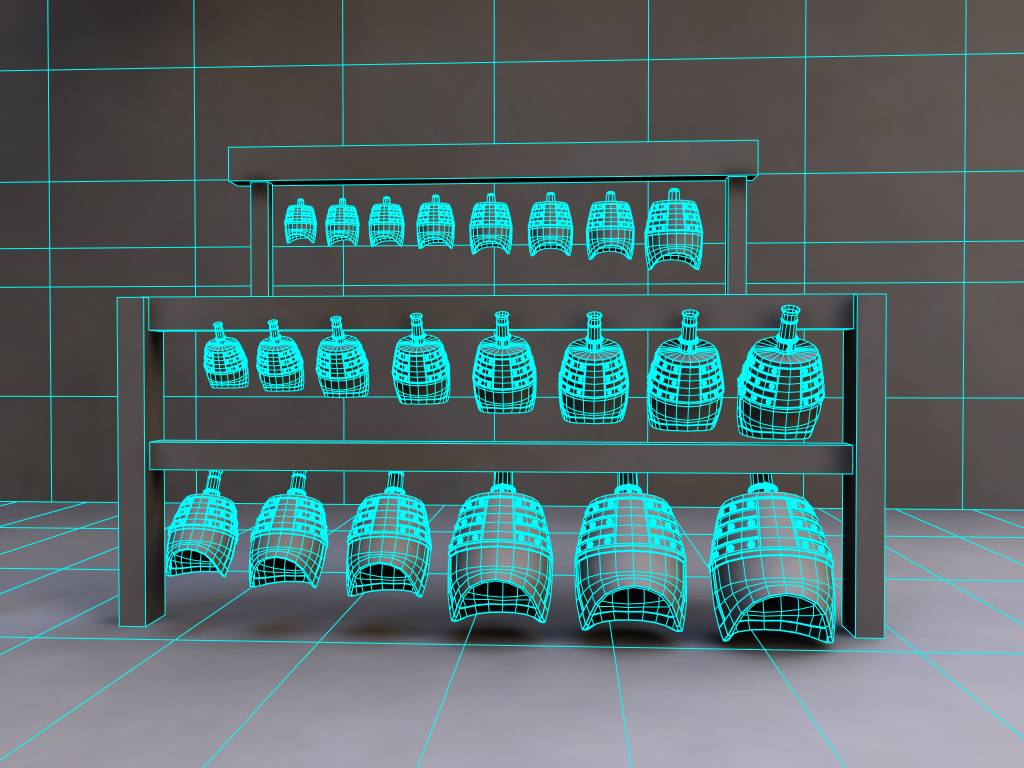
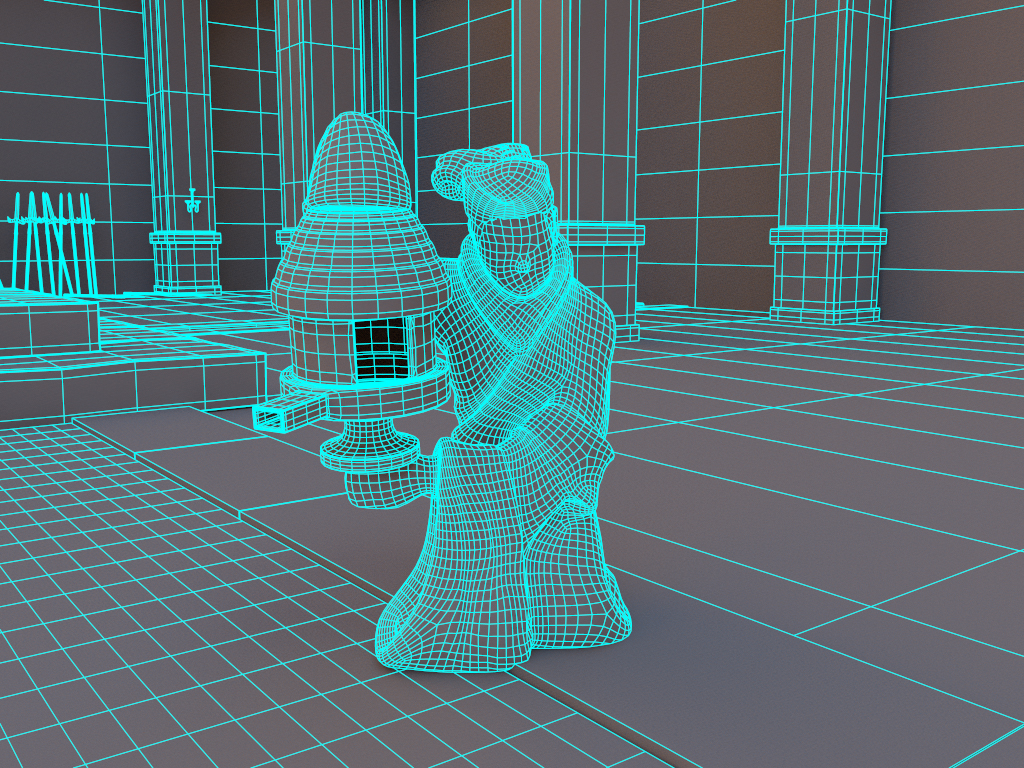
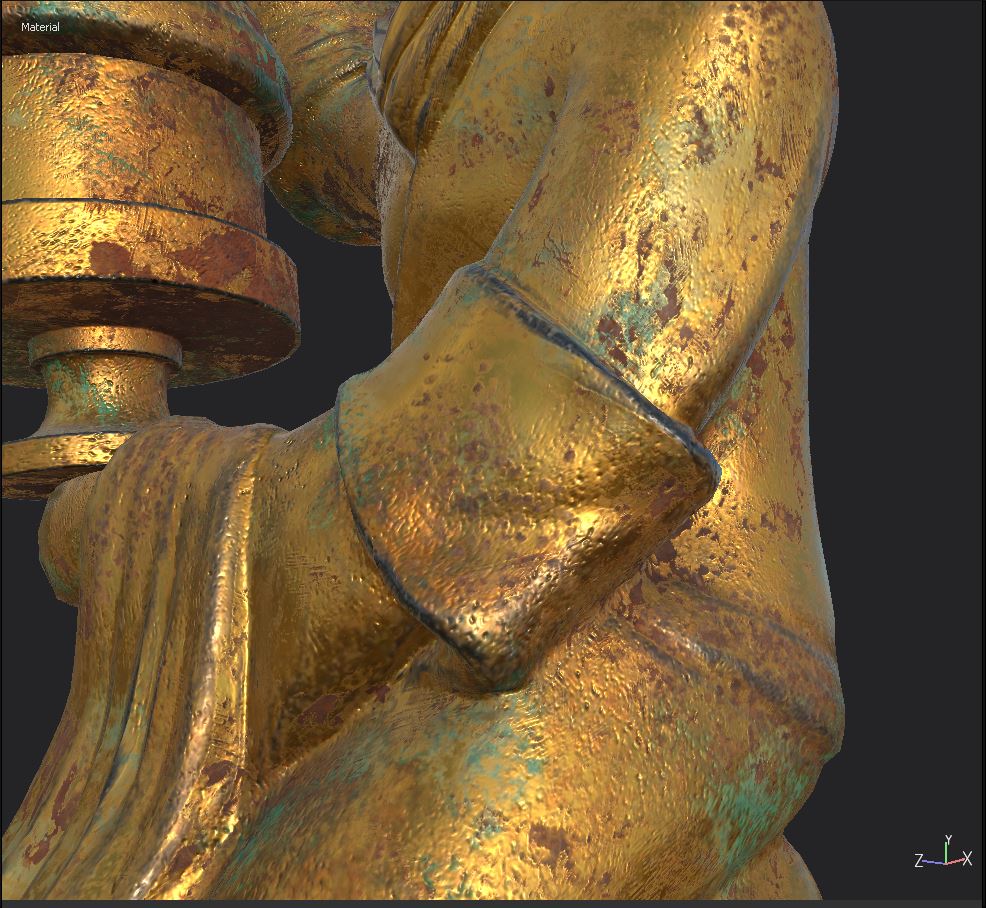
All the assets were created using Maya, Zbrush and Substance Painter, utilizing advanced shading and lighting techniques in Maya, and texturing and material creation in Substance Painter.
front Room
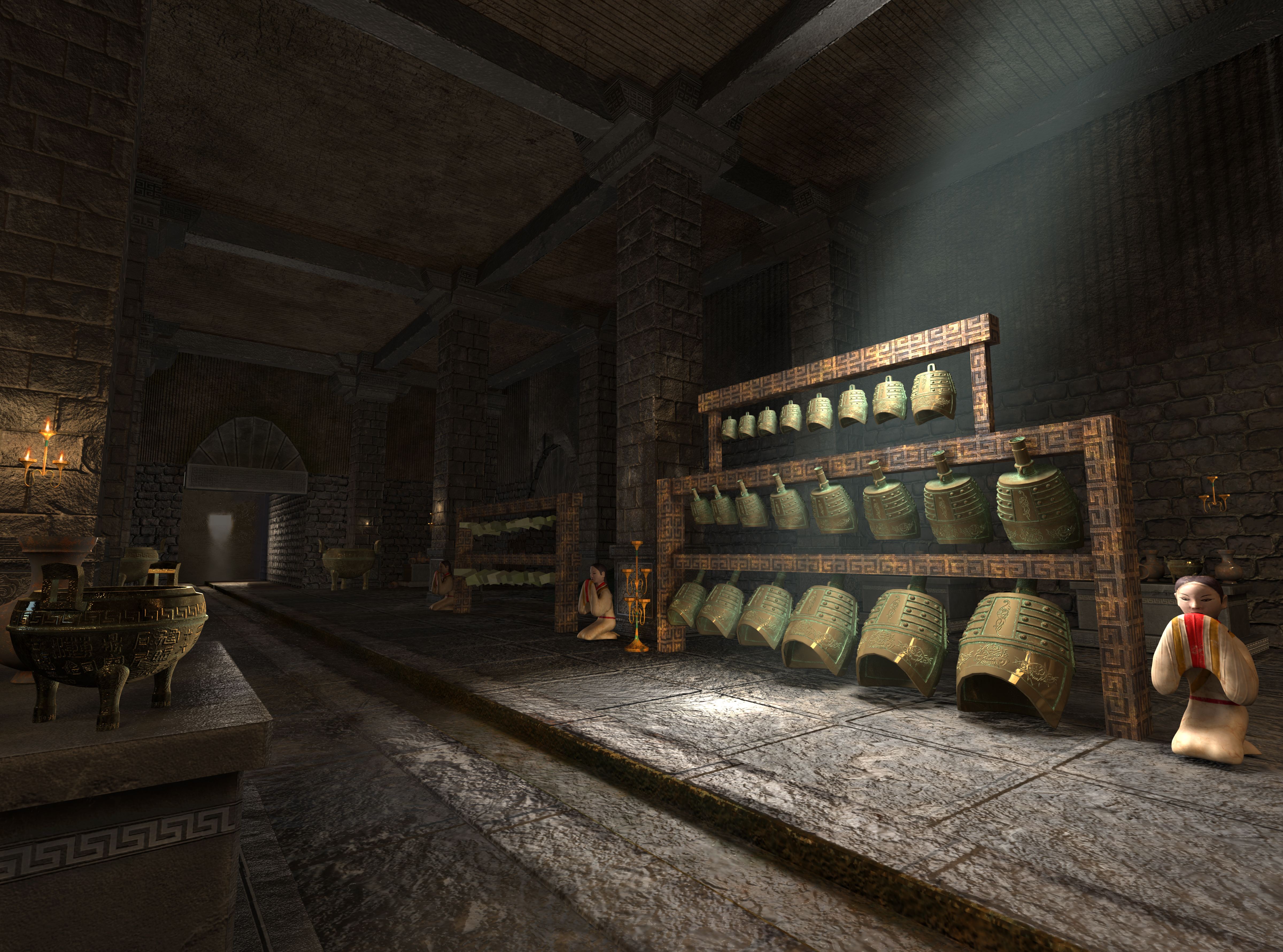
In the tombs of emperors and nobles, a wide variety of human earthenware figures were found, including soldiers, maids, and musicians, as well as domestic animal earthenware such as horses, cows, sheep, and pigs. All of these pieces were crafted in the same distinctive style.
main Room
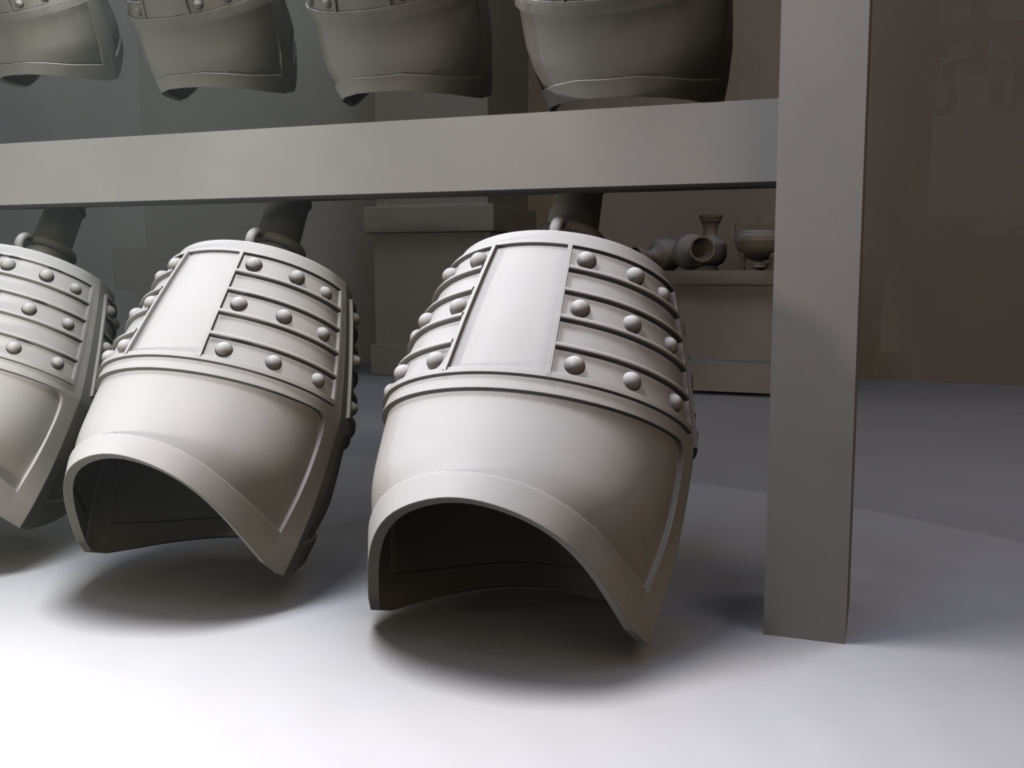
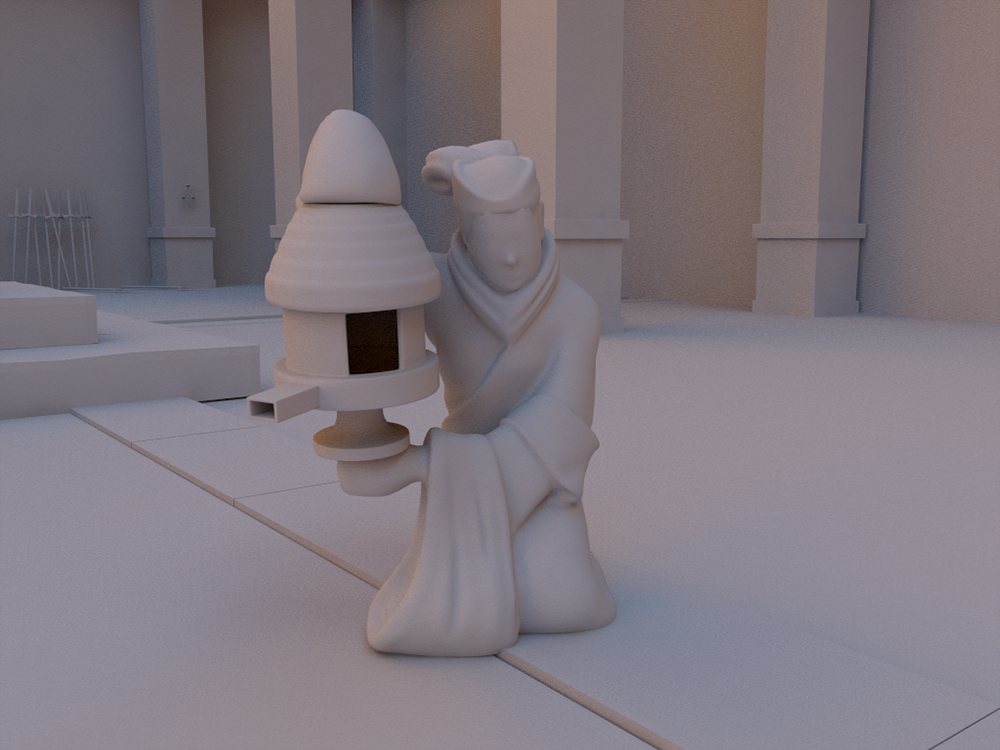
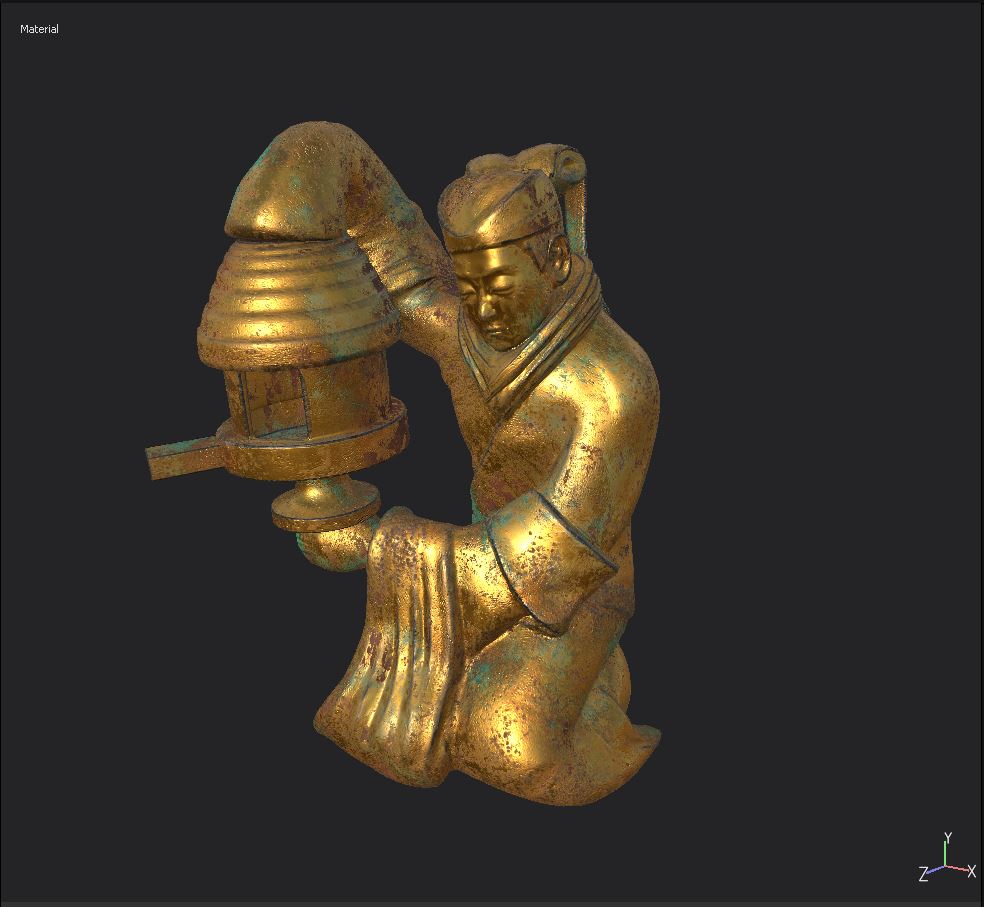
During the Late Bronze Age, the Han Dynasty produced remarkable bronze ware that played a significant role in Chinese history. Archaeological discoveries have revealed various household bronze utensils including tripod cauldrons, jars, wine vases, bronze mirrors, etc.

Chariot Room
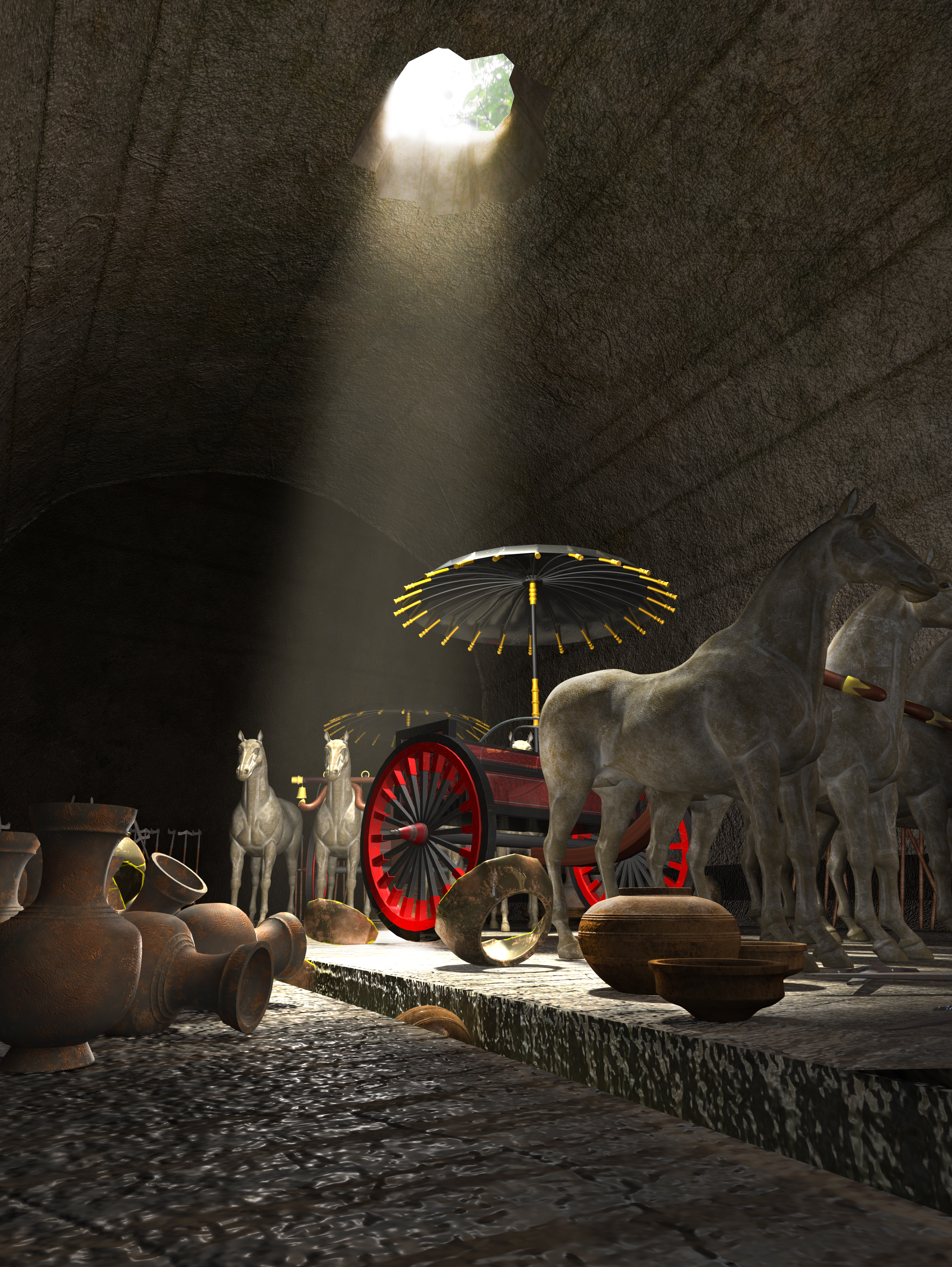
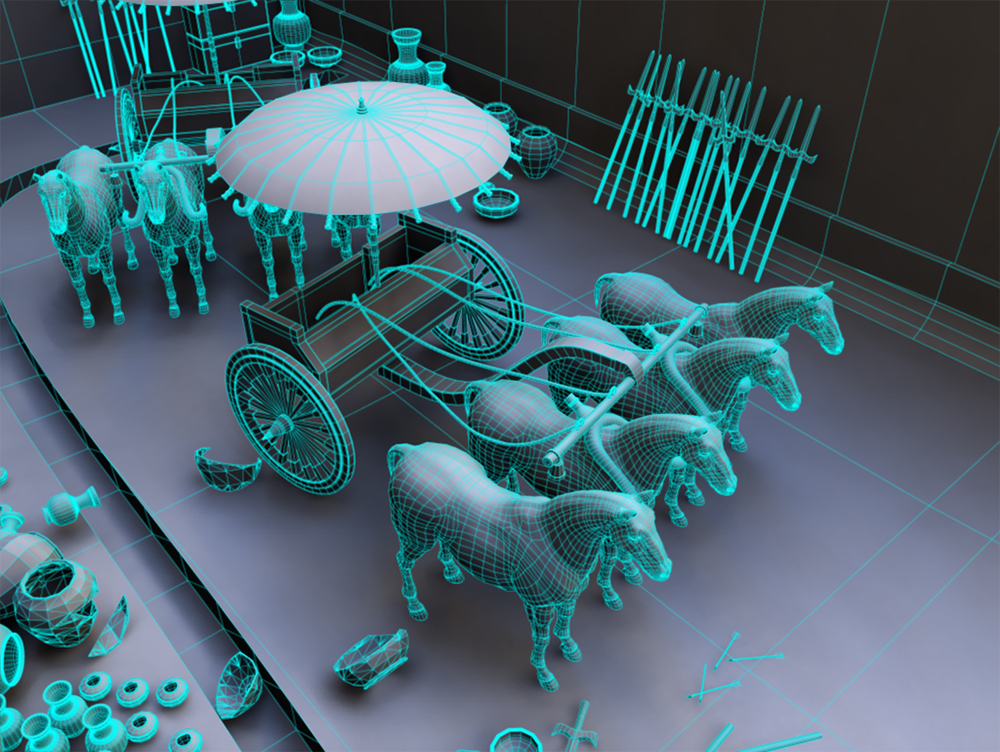
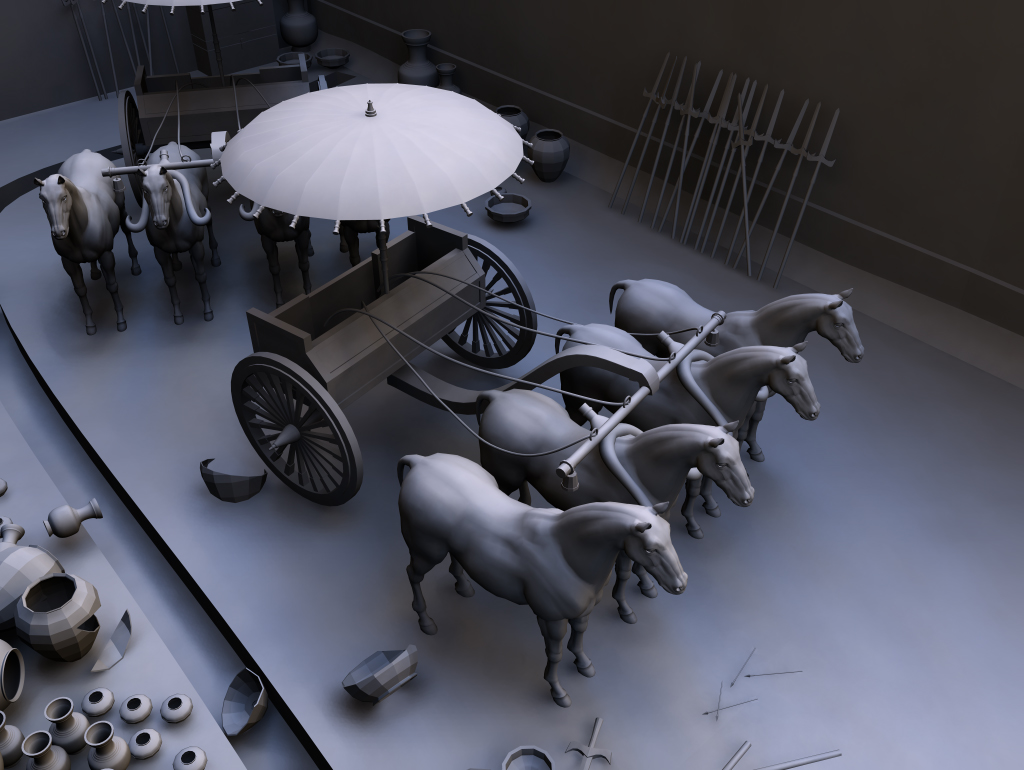
Historians have discovered that most of the well-preserved tombs from the Han Dynasty contained a significant number of valuable cultural relics. This was due to the social consciousness of the time, as people during the Han Dynasty believed in being reborn into another world after death, but one that was identical to the world before death.
Tomb structure
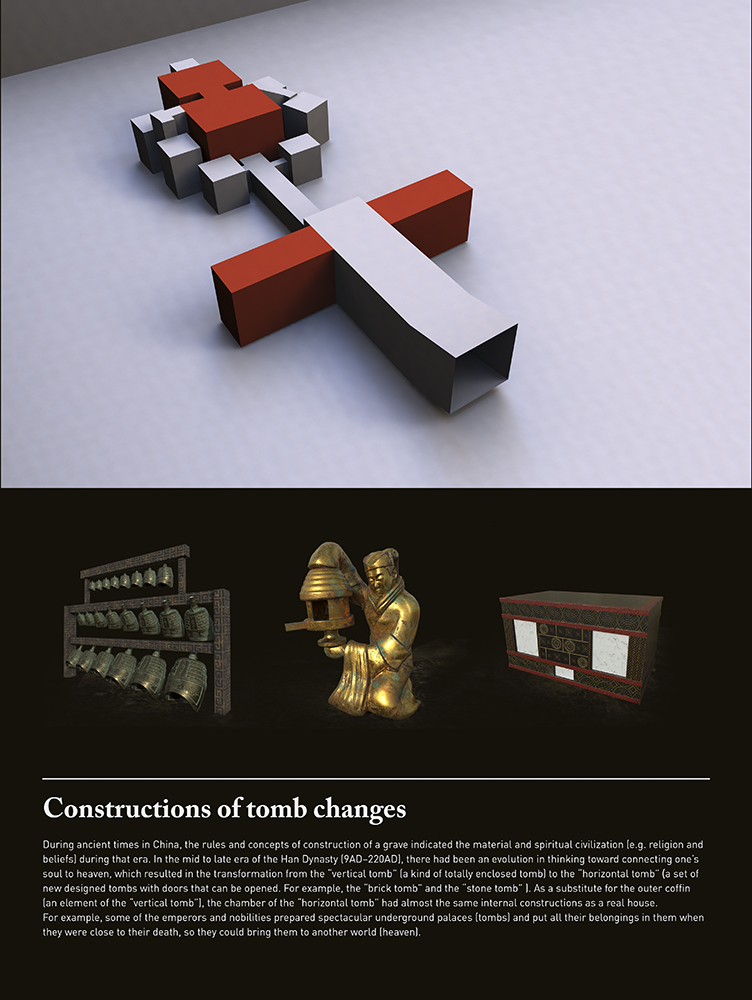
In ancient China, the construction of graves reflected the material and spiritual civilization of the time. During the Han Dynasty (9AD-220AD), there was a shift in thinking that aimed to connect one’s soul with heaven. This led to the evolution from the “vertical tomb” (a completely enclosed tomb) to the “horizontal tomb” (a newly designed tomb with doors that could be opened, such as the “brick tomb” and the “stone tomb”).
DELIVERABLE
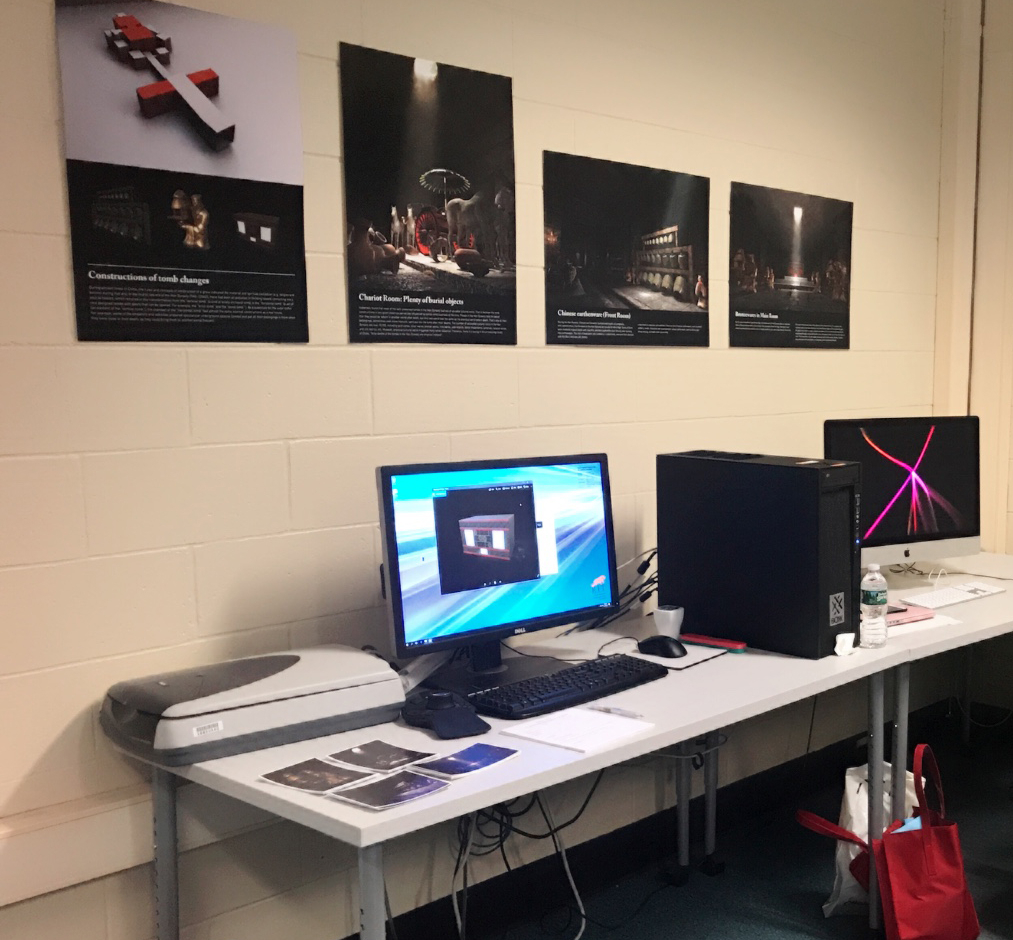
The project consisted of four posters with accompanying narratives that provided an overview of the structure of the Han Dynasty tomb, specifically the front room, main room, and chariot room.
Although these posters do not encompass all the rooms in the ancient tombs, they serve as a representation of the unique construction of this type of tomb.
 Ling Design